

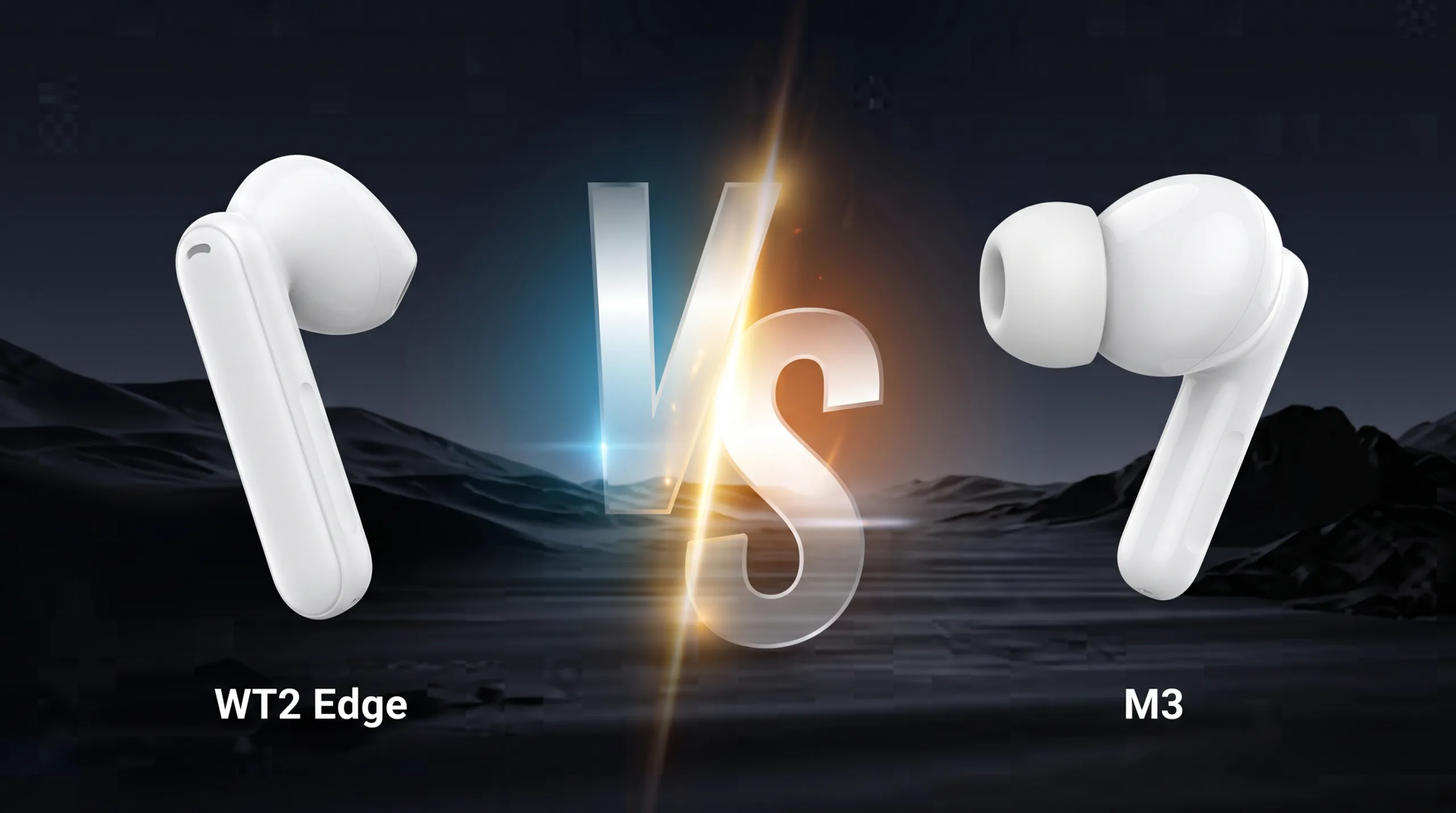
If you are shopping for foreign language translation earbuds in 2026, you will inevitably hit the exact same fork in the road: Timekettle WT2 Edge or Timekettle M3?
Both devices are made by the same undisputed market leader in AI translation hardware. Both pair with the exact same Timekettle smartphone app. Both support 40 languages and 93 regional accents. And both promise to break down language barriers across overseas flights, international business lunches, and foreign train stations.
Yet there is a massive $200 price chasm between them:
- The Timekettle M3 sits at a wallet-friendly ~$120 / ~€115.
- The Timekettle WT2 Edge demands a hefty ~$320 / ~€310.
Why does the WT2 Edge cost nearly triple the price of the M3? Is the more expensive model genuinely three times better, or is the $120 M3 actually the smarter purchase for most travelers?
Having put both headsets through extensive hands-on testing across bustling cafes, noisy public transit, and offline travel simulations, here is the complete, unfiltered head-to-head breakdown.
⚡ Quick Verdict: The 30-Second Buying Decision
If you don’t have time to read the full deep dive, here is the bottom-line buying truth:
- Buy the WT2 Edge ($320) if: You need natural, hands-free conversation where two people can look each other in the eye and speak continuously without touching earbuds or waiting like a walkie-talkie. (Best for: Bilingual couples, in-laws, boardroom negotiations).
- Buy the Timekettle M3 ($120) if: You want an all-in-one travel earbud that handles foreign taxis, street food, and museum tours, while doubling as your everyday Spotify buds with ANC and 7.5-hour battery life. (Best for: Solo backpackers, budget tourists, digital nomads).
Timekettle WT2 Edge vs. Timekettle M3: Full Hardware Comparison
| Hardware Feature | Timekettle WT2 Edge (~$320) | Timekettle M3 (~$120) | Advantage |
|---|---|---|---|
| Conversational Flow | Full-Duplex (Simultaneous 2-Way) | Half-Duplex (Tap-to-Speak / Walkie-Talkie) | WT2 Edge |
| Claimed Latency | 0.5 to 3.0 Seconds | 0.5 to 2.0 Seconds | WT2 Edge |
| Acoustic Driver | Vocal Register Driver (~300Hz–3.4kHz) | 10mm Dynamic Drivers (Full Range) | Timekettle M3 |
| Music Sound Quality | Poor (Thin, hollow, zero bass) | Good (Warm bass, clear mids, punchy) | Timekettle M3 |
| Active Noise Cancelling | None (Open acoustic design) | Yes (Up to 30 dB ANC) | Timekettle M3 |
| Fit Architecture | Semi-in-Ear (Open-fit, no silicone) | In-Ear with Soft Silicone Tips (2 sizes) | Tie (Preference) |
| Single-Charge Battery | Up to 3.0 Hours continuous talk | Up to 7.5 Hours (Music & Translation) | Timekettle M3 |
| Total Playtime with Case | Up to 12 Hours (3 recharges) | Up to 24 Hours (~2.5 recharges) | Timekettle M3 |
| Charging Case Design | Single Flip-Top Magnetic Capsule | Innovative Magnetic Split-Case (2 Halves) | Timekettle M3 |
| Multi-Person Meetings | Yes (Group Mode up to 6 earbuds) | No (1-on-1 pairs only) | WT2 Edge |
| Offline Language Packs | Included (with Offline version) | In-App Purchase (~$9.99 / pair extra) | WT2 Edge |
| Retail Price | ~$320 / ~€310 | ~$120 / ~€115 | Timekettle M3 |
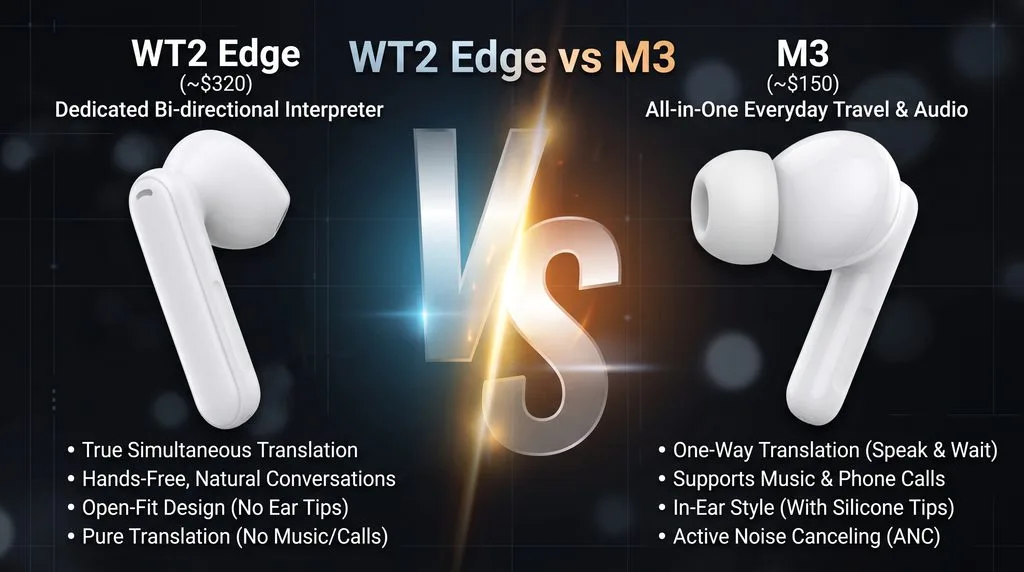
Round 1: Conversational Flow (The $200 Elephant in the Room)
This single round represents 90% of why the WT2 Edge costs $200 more than the M3.
How the WT2 Edge Works (Full-Duplex):
The WT2 Edge operates in Simultaneous Mode (Full-Duplex). You wear one earbud, give the second earbud to the other person, and put your phone on the table.
- Nobody touches a single button.
- Nobody looks down at a phone screen.
- You talk. When you pause naturally to take a breath, the dual beamforming microphones detect the pause, translate the sentence in roughly 0.5 seconds, and whisper it directly into the other person’s ear.
- While they are hearing your translation, they can start answering immediately. Because the audio channels operate bi-directionally at the exact same time, you can have a natural, overlapping human dialogue.
How the Timekettle M3 Works (Half-Duplex):
The Timekettle M3, by contrast, operates in Touch Mode (Half-Duplex). It functions like a polite walkie-talkie or a structured Zoom meeting:
- You wear one earbud and hand the other to your conversation partner.
- You must lightly tap the stem of your earbud before speaking.
- You speak your sentence, then stop.
- The system translates and plays the sentence into their ear.
- When they want to reply, they must tap their earbud, speak, and wait for the translation to land in your ear.
If both people try to talk at the same time on the M3, the audio collides and translation halts.
The Verdict on Round 1:
If your primary goal is an emotional, flowing conversation—such as introducing your foreign-language partner to your family or negotiating an overseas business deal—the WT2 Edge completely outclasses the M3. That hands-free, eye-contact experience is worth every penny of the extra $200. But if you just need to ask a travel guide questions over lunch, the M3’s tap-to-speak flow is perfectly adequate.
Round 2: Everyday Audio, Music & Phone Calls
Here is where the tables turn completely in favor of the budget model. If you spend $320 on the WT2 Edge hoping to ditch your AirPods, you will be severely disappointed.
- Timekettle WT2 Edge: The engineers deliberately tuned the internal dynamic drivers strictly for the human vocal frequency band (~300Hz to 3,400Hz). Human voices sound remarkably crisp, intelligible, and forward. But if you try to stream a playlist on Spotify or watch an action film on Netflix, the audio is hollow, tinny, and completely devoid of sub-bass rumble. It is a communication tool, not an entertainment earbud.
- Timekettle M3: The M3 was designed from day one as a true 3-in-1 hybrid (Music + Calls + Translation). It packs a 10mm full-range dynamic driver with AAC codec support. Bass is warm and energetic, acoustic vocals are clean, and there is enough punch to make gym workouts and long flight movie sessions genuinely enjoyable.
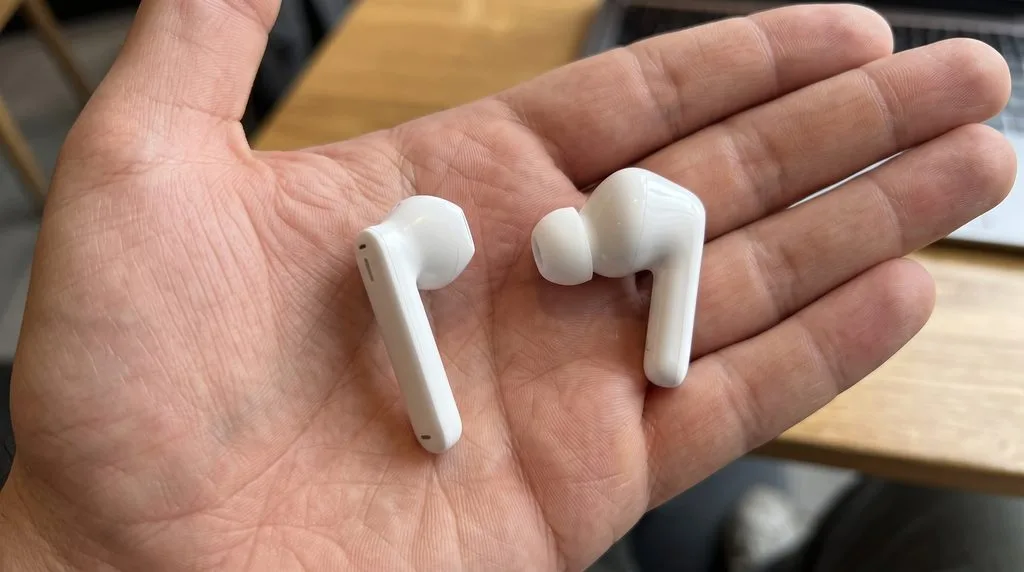
Timekettle M3 wins by a landslide. It eliminates the need to carry two separate pairs of earbuds on vacation. With the WT2 Edge, you will almost certainly still need to carry your AirPods or Sony buds for music.
Round 3: Battery Life & Travel Stamina
When you are traveling across international time zones, running out of battery mid-day in a foreign city is a nightmare.
- WT2 Edge Battery Life: You get approximately 3.0 hours of continuous simultaneous translation on a single charge. The charging case provides 3 additional full charges, giving you roughly 12 hours total. 3 hours is plenty for a 90-minute business meeting or customs interview, but on an all-day walking tour, you will need to recharge mid-day.
- Timekettle M3 Battery Life: The M3 delivers an impressive 7.5 hours of continuous listening and translation per charge. Combined with the case, you get up to 24 hours total playtime. That means you can listen to podcasts during a 6-hour transatlantic flight, land at your destination, and immediately start translating without battery anxiety.
Timekettle M3 is the clear winner. More than double the single-charge battery life makes it far more practical for unpredictable travel days.
Round 4: Fit, Noise Isolation & Charging Case Design
The physical design philosophy between these two siblings could not be more different:
Earbud Fit Style
WT2 Edge (Semi-in-Ear): Uses an open-fit, rigid plastic shell similar to classic Apple AirPods. There are no silicone tips inserted into your ear canal. It is extraordinarily comfortable for long sessions with zero ear canal pressure, but provides zero passive noise isolation. In a loud subway station, you will have to crank the translation volume.
M3 (In-Ear with Silicone Tips): Features traditional soft silicone tips that slide snugly into your ear canal. It provides a tight physical acoustic seal and includes up to 30 dB of Active Noise Cancellation (ANC), effectively muting low airline cabin hums and train rumble.
The Case: Capsule vs. Magnetic Split-Case
While the WT2 Edge uses a conventional flip-top charging capsule, the M3 introduces one of the most clever design innovations in modern audio: the magnetic split-case.
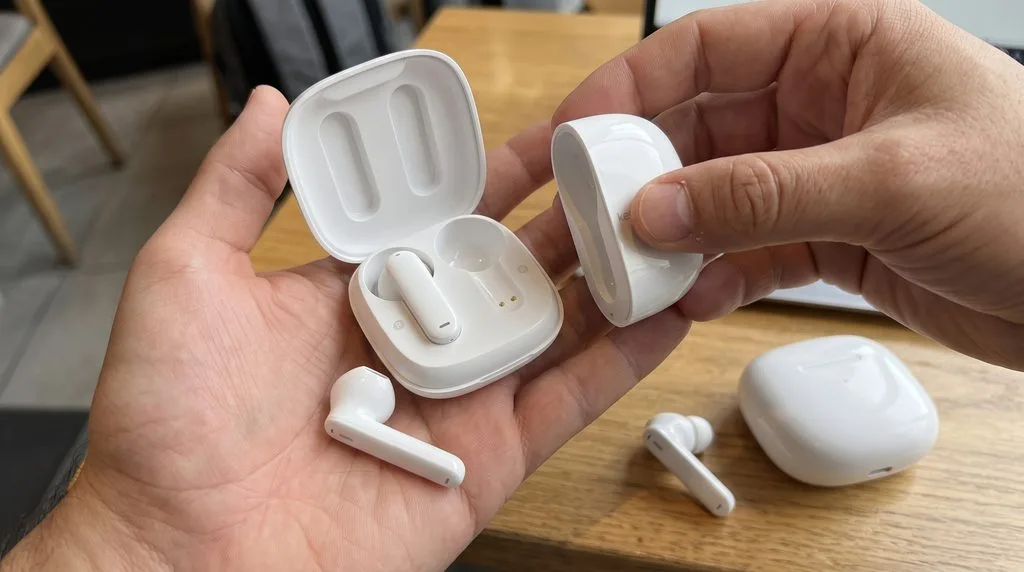
When you want to share an earbud with a friend, tour guide, or foreign colleague, you don’t hand them a bare earbud. You physically pull the case in two, hand them their dedicated magnetic half with their earbud inside, and keep your half. It feels thoughtful, clean, and impressive in public.
Round 5: Solo Travel Modes & Offline Packs
Both headsets feature three software modes inside the Timekettle app, but their execution differs slightly:
Solo Travel in Public: Speaker Mode
When talking to taxi drivers, train station clerks, or street vendors, neither device requires handing over an earbud. You keep both earbuds in your ears, talk into your earbud, and your phone’s loudspeaker plays the translated foreign audio to the stranger.
The M3 holds a slight edge here thanks to its Split-Screen UI: you place the phone flat on the counter between you and the vendor. The top half faces them with large translated text and their language button; the bottom half faces you.
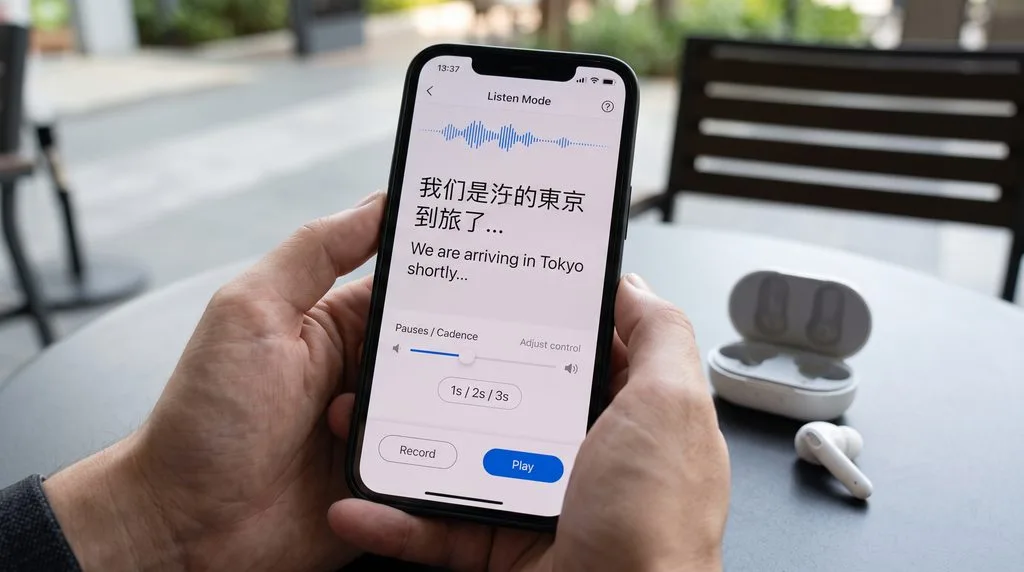
Museum Tours & Lectures: Listen Mode
For passive listening, the M3 offers a distinct advantage with its 1.2x Playback Speed setting. Machine translation carries an unavoidable 1.5 to 2.0-second cloud delay. Setting audio playback to 1.2x helps the translated voice catch up smoothly, keeping you tightly synced with a live tour guide or foreign lecture.
The Offline Reality:
- WT2 Edge Offline: When you buy the WT2 Edge Offline version, 13 major language pairs come pre-activated out of the box with unlimited lifetime access.
- M3 Base Version: The base M3 package is online-only. To unlock offline language pairs, you must purchase them inside the app for roughly $9.99 per pair (or purchase the specialized M3 Offline bundle).
Head-to-Head Scoring Breakdown
| Evaluation Category | Timekettle WT2 Edge | Timekettle M3 | Category Winner |
|---|---|---|---|
| Conversational Realism | 9.8 / 10 | 8.0 / 10 | 🏆 WT2 Edge |
| Music Sound Quality | 4.5 / 10 | 8.5 / 10 | 🏆 Timekettle M3 |
| Battery Life & Longevity | 6.5 / 10 | 9.2 / 10 | 🏆 Timekettle M3 |
| Noise Isolation & ANC | 5.0 / 10 | 8.6 / 10 | 🏆 Timekettle M3 |
| Sharing Hygiene & Case | 7.5 / 10 | 9.5 / 10 | 🏆 Timekettle M3 |
| Multi-Person Meetings | 9.5 / 10 | 4.0 / 10 | 🏆 WT2 Edge |
| Value for Money | 7.8 / 10 | 9.4 / 10 | 🏆 Timekettle M3 |
| Overall Score | 9.2 / 10 | 8.8 / 10 | Context Dependent |
Real-World Buying Scenarios: Which One Fits You?
Buy the Timekettle M3. At $120, it does everything you need, eliminates carrying a second pair of music buds, and its 7.5-hour battery won’t die on you mid-day.
Buy the Timekettle WT2 Edge. Tapping an earbud during a contract negotiation looks amateur. The WT2 Edge’s simultaneous, hands-free conversation and 6-person Group Mode provide the executive polish you need.
Buy the Timekettle WT2 Edge. When having an intimate, emotional dinner conversation, you want natural eye contact. The WT2 Edge’s bi-directional flow creates a genuine emotional connection that tap-to-speak simply cannot replicate.
Buy the Timekettle M3. The $200 you save can cover two weeks of hostel accommodation or train tickets, and the built-in 30 dB ANC helps you work in noisy cafes.
Final Verdict: Is the WT2 Edge Worth the Extra $200?
Here is the honest truth from 14 years of testing consumer tech:
If you buy the Timekettle WT2 Edge, you are paying $320 for one specific superpower: the magic of hands-free, simultaneous bi-directional human conversation. If you need that superpower for serious cross-border relationships or corporate business meetings, it is worth every single cent of the $200 premium.
However, for 80% of everyday travelers, the Timekettle M3 is undeniably the smarter, more practical purchase.
- 7.5 hours of continuous battery life (more than double the WT2 Edge).
- 30 dB Active Noise Cancellation with a comfortable in-ear silicone seal.
- Genuine everyday music audio with punchy 10mm dynamic drivers.
- The brilliant magnetic split-case for clean, effortless sharing.
Unless seamless simultaneous conversation is a strict requirement, save the $200, buy the Timekettle M3, and spend the leftover cash on your next flight ticket.
FAQs
Do both headsets work without an internet connection?
Yes, both devices support offline translation across major language pairs (such as English to Spanish, Chinese, Japanese, French, and German). However, the WT2 Edge Offline version comes with 13 pairs pre-loaded, whereas the base Timekettle M3 requires you to purchase individual offline language packs for roughly $9.99 per pair inside the Timekettle app.
Which one sounds better for listening to music on Spotify?
The Timekettle M3 sounds drastically better for music. Equipped with 10mm dynamic drivers and AAC codec support, it produces warm bass and clean treble. The WT2 Edge is tuned solely for human speech frequencies, resulting in hollow, flat audio with virtually zero bass.
Can I connect more than two earbuds together for group meetings?
Only the Timekettle WT2 Edge supports Group Mode, allowing you to connect up to six individual earbuds across multiple devices for multilingual team conferences. The Timekettle M3 only supports standard two-earbud pairs.


[…] Need a deeper side-by-side comparison? Read my comprehensive showdown: Timekettle WT2 Edge vs. Timekettle M3. […]